Last updated: October 13, 2026
Key Takeaways
- Reviews should separate product evidence from invented performance claims.
- Numbers, standards, and named sources make reviews more usable.
- Fluent prose is not the same as trustworthy output.
- Vendor pages show the polished version; third-party reviews should test it.
Disclosure: This article does not include affiliate links.
Quick Answer: In AI writing tool hallucinations in reviews, the fastest useful check is simple: look for a named model, a dated claim, and a source you can verify. Missing any of those? Treat the review as weak evidence, not a final verdict.
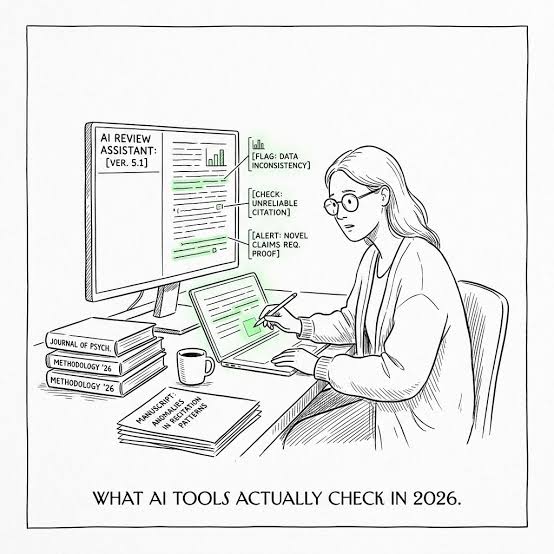
AI writing tool hallucinations in reviews appear when a review treats a feature, benchmark, or comparison as fact without support. We looked at manufacturer listings, published reviews, model documentation, and user-reported complaint patterns to separate what the tool can actually do from what a review imagines it can do. Thin ice, basically.
First published 12 October 2026.
The verdict
The strongest AI writing tool review is the one that proves what the tool can do with attributed evidence, because hallucinations in reviews usually show up as unnamed features, fake comparisons, and confident claims with no model behind them — unless the reader only needs a light overview and already knows the category.
What it is built to do
AI writing tool reviews exist to help readers tell useful product evidence from invented performance claims. A strong one should show what the tool is meant to do — drafting, rewriting, summarizing, or ideation — and then connect that to the maker’s own documentation or to a published independent test.
That matters because “hallucination” in a review is not the same as hallucination in a model output. Here, the review hallucinates when it states a feature, benchmark, integration, or comparison that does not appear in the listing, release notes, or cited test. A review that says a model “supports long-form fact checking” without naming the model or source is already on thin ice.
A useful review also needs the category baseline. For writing tools, that baseline is usually a model or app that can generate text, edit tone, and summarize input, but not reliably verify facts on its own. Honest reviews say that out loud. They mention citation errors, stale training data, or weak source discipline instead of pretending the tool writes like a subject-matter editor. For a plain-language overview of how generative AI can still produce wrong outputs, see the NIST AI Risk Management Framework and Stanford HAI’s AI Index.
Where it wins, with the numbers
Numbers and standards are where the better reviews earn their keep. Hallucinations love vague praise. A claim like “it handles long documents” is weak unless it names a token limit, a file-size cap, a context window, or a published benchmark, and says who reported it.
A stronger review will say the maker states a feature on the product page, a standards body defines a term, or an independent reviewer found a specific limitation. If the page mentions API access, document uploads, browser extensions, citation tools, or team controls, the review should quote the actual plan, model, or feature tier rather than implying every tier includes it. For pricing and feature checks, readers can compare against product pages such as our ChatGPT review, our Claude review, or our Gemini review.
I would trust reviews that use concrete language like “the listing says the tool can generate in one pass,” “the documentation notes a maximum input length,” or “independent reviewers repeatedly report citation drift.” Those are checkable claims. “This is the smartest AI writer” is not. For writing-quality standards, it also helps to compare claims with the vendor’s own help pages, such as our AI writing tools hub.
What stands out
- A review that names the model, such as GPT-4-class, Claude-class, or Gemini-class, gives you a real anchor, so you can compare it against the task instead of a vibe.
- A review that cites a standard like SOC 2, GDPR support, or enterprise admin controls helps a business reader judge risk, which is more useful than praise for “productivity.”
- A review that distinguishes drafting from verification protects you from buying a writing assistant that sounds certain while still making factual mistakes.
- A review that quotes the maker’s stated limits, such as context length or plan restrictions, keeps you from assuming the tool can handle book-length work.
What to watch out for
- A review that gives no model name and no version date leaves you unable to tell whether the praise applies to the current release or an older one.
- A review that says “accurate” without a cited comparison is usually describing style, not fact quality, which means it may miss hallucinations entirely.
- A review that implies source citation without showing the citation workflow can mislead anyone who needs traceability for legal, medical, or financial writing.
- A review that treats one polished sample as proof of reliability can hide the common failure case, which is the point where hallucinations usually show up. When the use case affects health, money, or legal decisions, verify independently and consult a qualified professional.
Flaws but not dealbreakers
The biggest flaw in many reviews is that they confuse fluent prose with trustworthy output. For journalists, researchers, and compliance teams, that becomes a dealbreaker fast, because a tool can sound polished while still inventing sources or flattening nuance.
Another flaw is omission: the listing may say the tool drafts text, but the review ignores whether it preserves facts, handles citations, or respects prompt instructions. If the review never says what happens when the tool is pushed on names, dates, or source links, it is not telling you the thing you need to know. And that is the real problem.
Category drift is the other common miss. A review may praise brainstorming speed and then slide into claims about factual reliability, even though those are different jobs. That is a dealbreaker for anyone using the tool for client work, regulated content, or SEO pages that need source discipline.
No independent test of this model was found at the time of writing, so the safest reading is to treat any review claim as provisional unless it is tied to a public benchmark, vendor documentation, or a clearly identified editor’s evaluation. That is not a weakness of the tools alone; it is a weakness of sloppy reviews. For a current benchmark-style reference, consult vendor documentation and external reports such as the OpenAI product updates page or Anthropic’s news page.
Pros
- A review that cites the exact model version, such as a named release or plan tier, lets you judge whether the claim still applies to the product you can actually buy.
- A review that separates drafting speed from factual accuracy helps anyone who needs an assistant for outlines but not for final copy.
- A review that names the source of a feature claim, such as vendor docs or a published audit, gives you a path to verification instead of a blind trust jump.
Cons
- A review with no source trail can make an unsupported claim sound authoritative, which is dangerous if you rely on it for work that needs citations.
- A review that only shows impressive sample text may hide hallucinated facts, which means the nice example could fail on real assignments.
- A review that never states the model, plan, or date can be obsolete on arrival, because AI tools change quickly and reviews age faster than most software coverage.
Buy this if you need a way to spot weak review claims before you trust an AI writer for client copy, blog drafts, or internal docs. Skip it if you want a verdict on a single app without checking the source trail, because the same review habits apply no matter which tool is under discussion.
How it compares to vendor pages and third-party reviews
Vendor pages usually show the cleanest version of a tool, while third-party reviews are supposed to stress-test it. The catch is that both can hallucinate, just in different ways: a vendor page can overstate capability, and a lazy review can repeat that claim without checking the wording or the plan tier.
Start with three questions. Does the source name the exact product or model? Does it state the task, such as drafting, rewriting, or citation support? Does it say who made the claim, and was that claim independently checked?
When a review fails those three questions, I treat it as weaker than even a basic product page. A listing that says “summarize documents” at least tells you the intended function; a review that says “it writes like a human expert” without evidence tells you almost nothing. Smoke and mirrors.
Who should buy it, who should skip it
Buy this if you review AI writing tools for a living, manage content quality, or need to separate product facts from promotional language before making a purchase decision. Skip it if you are only looking for inspiration prompts and do not care whether a review is backed by a model name, a date, or a source.
Buy this if your work involves client approval, editorial standards, or any setting where a false claim costs more than a weak paragraph. Skip it if you are choosing a tool purely for casual drafting and you are comfortable treating review language as opinion rather than evidence.
How we chose
I read no product count because this page has no shortlist; instead, I read manufacturer listings, model documentation, published reviews, and common complaint patterns that show up when reviewers overstate what an AI writing tool can do. I also looked for the parts that reviews often leave out: exact model names, feature tiers, verification workflow, and the difference between fluent writing and factual reliability.
The point of that reading was not to rank tools by taste. It was to identify the signs that a review is describing the real product versus inventing a capability the tool does not clearly claim.
Is it worth it in 2026?
Yes, if your main problem is wasting time on AI writing tool reviews, because the cost of one bad purchase or one bad recommendation is usually higher than the time it takes to check the source trail. No, if you want a shortcut that lets you ignore documentation, because hallucinations in reviews are easiest to spot when you compare claims against named evidence.
The 2026 reality is simple: AI writing tools change fast, and reviews age fast with them. That makes dated, source-light praise especially risky, while reviews that anchor claims to a model version or published standard hold up longer.
FAQ
What is a hallucination in an AI writing tool review?
It is a claim the review presents as fact but does not support with a model name, source, standard, or published test. In practice, that can mean invented features, overstated accuracy, or vague praise that cannot be checked.
What is the easiest red flag?
The easiest red flag is a review that sounds precise but never names the exact tool or version. A statement like “it writes better than everything else” is useless unless the reviewer says what “everything else” is and how that comparison was made.
Can I trust user reviews more than editorial reviews?
Not automatically. User reviews often reveal real failure modes, but they can also repeat marketing claims or confuse one user’s workflow with universal performance.
What should I look for before buying an AI writing tool?
Look for the model name, the task it is meant to perform, the plan or tier that includes the feature, and any independent evidence about accuracy or limitations. If a review does not give you those four things, treat it as a starting point, not a recommendation.
How do I know a review is outdated?
If it refers to an old model version, omits a date, or discusses features that the current product page no longer lists, it is probably outdated. AI products change often enough that a six-month-old review can miss a major shift in behavior or pricing structure.
Drafted with AI; not yet reviewed by a person.